
Jinalaya
With the great inspiration of Marudhar Jyoti Her Holiness Maniprabha Shreeji Maharaj, the construction work of Shri Rishabh Jinprasad is in swing in Mohanbari. The architecture and design of this temple is inspired by world famous Jain temples at Ranakpur and Delwara. The temple’s splendid courtyard, gigantic domes, artistic carvings on white marble, and unparalleled sculpture make it distinctive and egregious. This temple is going to be one of the unique temples in Jaipur.
India is the land of rich ancient culture, the birthplace of sage rishi-munis and extremely intellectual maharishis. Jaipur, the capital of Rajasthan, is the pride city of jewelers, art lovers, and devotees. It is one of the most impressive centres of attraction for tourists from the country and abroad. In this sanctified land, at the foot of the Hindu pilgrimage route Galta Ji and amidst the picturesque hills on the Jaipur-Delhi highway, the huge complex of Mohanbari is located. It is two hundred and fifty years’ old immaculately decorated statues of Yugadidev (the architect of this era), rare footpads and statues of Vetragi Mudra, along with Vrishabha Lanchan of Lord Paramatma Adinath, and the lotus feet of Jinkushalsuri Ji Maharaj with effective Khartargachchh Shringar. The place with panoramic pictures delivers blissful spiritual peace.
This place holds even more significance for Jain devotees, as the Samdhi Mandir of Paramatma Bhakti Shri Jayanand Ji and Shalini Pravartini Aagam Jyoti Sajjan Shreeji are situated here. Also, this place has the funeral sites of great sadhvi of twentieth century Pravartini Mahodaya Ji and Jain Nightingale Vikshakshan Shriji.
History
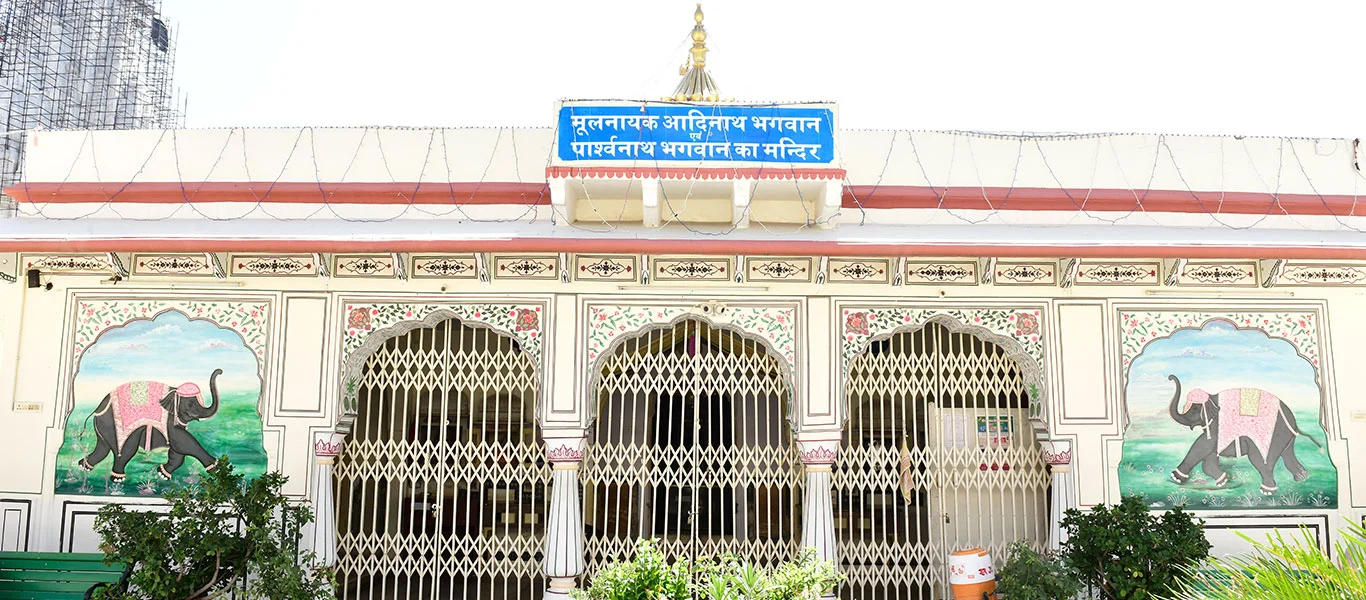
The Mohanbadi, located on the National Highway No. 8 Jaipur-Agra-Delhi Road, has tremendous sanctity for Jains. The beautiful complex is spread over a huge area of about 14 bighas. The complex has been built in the peaceful and sacred environment in the midst of Mother Nature in the green mountain range of Aravalli. This gigantic 108-foot high temple with gorgeous artistic creations was inspired by Jain Sadhvi Shree Dr. Maniprabha Shreeji Maharaj. She had conceptualised the idea of this temple in February, 1986, during her gracious presence near Birla Mandir in Jaipur. She had a perfect gorgeous vision of a wonderful Jain temple that could be seen by a common man. Her imaginary feelings were so strong about it that everyone would unintentionally turn out and say, “Let’s go to the Jain temple”. She shared this idea with some Shravaks at that time, but initially no noteworthy progress could be made in this direction.
Meanwhile, Sadhvi Ji continued to tour all over the country during her Shriji Vihar, but the magnificent dream of the wonderful temple had cemented in her heart and mind. During her kind visit to Jaipur, she inspired the eminent gem merchant, Shri Vimal Chand Ji Surana, about the holy project. Surana ji immediately expressed his unconditional consent to this proposal, and the noble idea of such a grand temple in the world-famous Pink City started taking shape. The Bhoomi Pujan and stone installation were done on December 8, 2010 and work started on January 31, 2011. The project was not as easy as it seemed to be since the land of the proposed temple site was uneven and unsuitable. It was a great challenge for the architects to design an appropriate layout and also for the contractors to establish a huge temple on such rough land that needed a strong foundation and support to take the load of this huge temple. But the commitment and passion that ascended from the holy and divine origin truly worked for 3 years, and collective hard work of all could make this happen. A strong foundation of 20 feet below and 20 feet high, i.e., 40 feet, was made for this grand and huge temple with ultimate grandeur. Since the use of iron usually weakens the walls of the temple in 50-100 years, whereas the walls made of stone and concrete remain the same for thousands of years. India’s most ancient temples and many historical monuments too, are direct evidence of this. Keeping this fact in mind, only stone and concrete have been used in the construction of the temple.
Art and Architecture
This entire temple is being constructed under the direction of Shri Mukesh Kumar Kanhaiya Ji Sompura, a resident of Pali district, whose last several generations had been associated with the construction of Jain temples. The family has successfully constructed many Jain temples in different parts of the country. The Surana family laid the first stone for the temple’s construction on April 23, 2016, after laying a foundation over an area of 100 x 150 feet, and construction work has continued since then with the help of devotees.This is going to be a crown to the city’s rich and prolific art treasures. The accordance seems to be conquered between the munificent generosity of nature and the dedication and artistic expression of devotion.
Sadhvi Maniprabha Shreeji, under whose enormous inspiration, the dream came true, says that it will enlighten the world of spirituality as a diamond in a gold ring and will attract thousands of visitors, pilgrims, and devotees from all over the world. Its inimitable artistry will give boundless pleasure and ecstasy like the gamut of divine music. She believes that although the idols in the temple are originally made of stone, real lives are transmitted into them through mantra power.
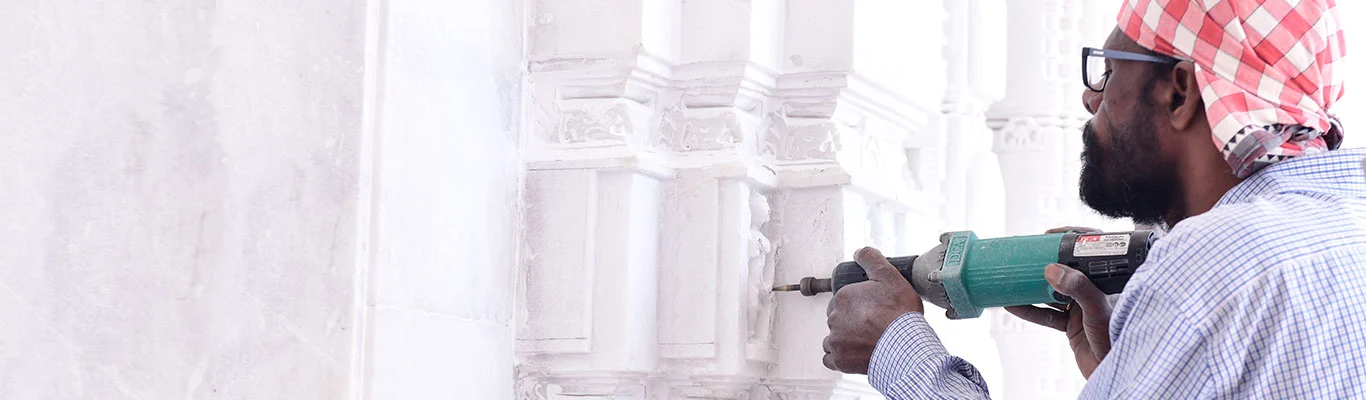
The eminent marble businessman of Makrana, Mohammad Iqbal, is playing a key role in the construction of the shrine. Following the inheritance of his father’s association with the construction of Jain temples, he has been providing economical yet quality marble for the temple. About two lakh cubic feet of marble will be used. The massive carving and polishing work is being done under his expert supervision. About 60 prominent artists from Orissa have been working hard for the last one year to make matchless sculptures in the Rang Mandap of the temple. Their hard work is giving life to the rough marble stones by carving them with distinctive fine art under the direction of Sonpura Ji.
Interesting Fact
This temple is the largest and tallest among all the temples of Rajasthan. Its Rang Mandap has a seating capacity of 2000 people. The original Grabgrih has a beautiful single stone, 57-inch, weighing about 700-800 kg, statue of Lord Rishabhdev, the first Tirthankara that spontaneously pulls everyone towards it with profound emotions and devotion. There are two more idols of Simandar Swami and Parshvanath Bhagwan of 41 inches each in the grave along with Moolnayak Bhagwan. In Gokhale, two 31-inch statues will be enshrined, and outside the Rang Mandap, the idols of six Gods and Goddesses of 21–21 inches will also be installed. These idols have been prepared by internationally renowned sculptor Mahendra Sharma Ji of Saraswati Murti Bhandar in Jaipur. While engraving these sculptures and idols so delicately, Jain astrology and mathematics calculations, etc., have been kept in mind with utmost care so that each of them may have serene spiritual dignity and divnity alongwith with legitimacy.
The entire temple is based on the Meru Prasad Nagaradi style. According to Acharya Maniprabh Sagar ji, the design of this temple will be a unique confluence of different forms of unique Jain architecture and designs, which have been brilliantly influenced by contemporary Jain customs. A magnificent coordination of different Jain traditions and doctrines will be effectively expressed through these sculptures of Rang Mandap.